


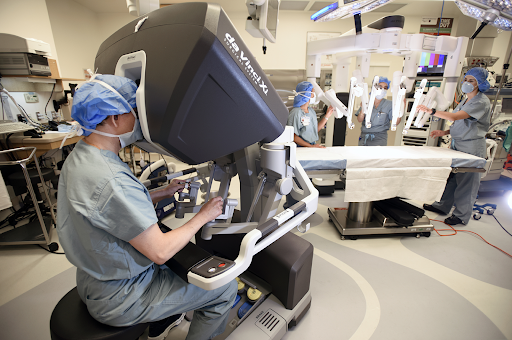
In recent years, the field of cardiac surgery has witnessed transformative advancements, thanks to the integration of robotics. Robotic-assisted surgery is a game-changer, enabling surgeons to perform highly intricate procedures with greater precision, flexibility, and control. This technological innovation not only enhances the surgical process but also promises better patient outcomes, reduced recovery times, and fewer complications.
Revolutionizing Precision
Cardiac surgery, due to the complexity of the heart and its surrounding structures, demands exceptional accuracy. Traditional methods, often requiring large incisions, limit a surgeon’s precision and control. However, robotic systems, such as the da Vinci Surgical System, have made it possible for surgeons to work with enhanced dexterity. These systems use small robotic arms controlled by the surgeon through a console, allowing for highly precise movements, even in tight or difficult-to-reach areas of the heart.
The robotic arms are equipped with specialized tools, such as a tiny camera that provides high-definition 3D images of the surgical site. These visuals help surgeons gain a better understanding of the heart’s anatomy, guiding them through complex procedures with greater clarity. This improvement in visualization and dexterity reduces the risk of human error and enhances the precision of the surgical procedure.
Minimally Invasive Procedures
One of the most significant benefits of robotic-assisted cardiac surgery is its ability to perform minimally invasive procedures. Traditional open-heart surgery typically involves a large incision down the chest, which can lead to significant trauma, long recovery times, and increased risk of infection. Robotic systems enable surgeons to perform surgery through much smaller incisions, significantly reducing the risk of complications such as infections, blood loss, and prolonged hospital stays.
Additionally, smaller incisions mean less scarring and a faster recovery process. Patients who undergo robotic-assisted surgeries often experience less pain and a shorter time spent in the hospital compared to those who have traditional open-heart surgery. This translates to an improved quality of life post-surgery, with many patients returning to their normal activities more quickly.
Increased Control and Flexibility
Robotic-assisted surgery allows surgeons to operate with superior control and flexibility. The robotic systems provide a level of motion that goes beyond human capabilities, offering a wider range of movements and greater stability than the human hand. For instance, the robotic arms can make micro-movements and rotate 360 degrees, making it easier to navigate around delicate areas of the heart, such as coronary arteries and valves.
Furthermore, robotics reduces hand tremors that can occur during lengthy or delicate procedures. The robotic system translates the surgeon’s hand movements into highly refined motions, allowing for enhanced surgical outcomes. This level of control is especially beneficial in procedures like valve repairs, coronary artery bypass, and atrial septal defect closures, where accuracy is crucial.
Shorter Hospital Stays and Faster Recovery
Robotic surgery has proven to be less invasive, resulting in faster recovery times. Patients who undergo traditional heart surgery often face extended hospital stays and a prolonged rehabilitation process. With robotic surgery, the smaller incisions and minimally invasive approach contribute to significantly shorter hospital stays. Many patients are discharged within a few days after surgery and are able to resume normal activities in weeks rather than months.
Promising Future for Cardiac Surgery
The future of cardiac surgery looks promising with the continued evolution of robotic technology. Research and development in robotic systems are underway to refine their capabilities, improve patient outcomes, and reduce costs. Furthermore, as more surgeons become trained in robotic techniques, the adoption of these systems in cardiac surgery will continue to grow.
The role of robotics in cardiac surgery is undoubtedly a game-changer, offering unparalleled precision, minimally invasive approaches, and faster recovery times. As technology progresses, it is expected that robotic surgery will play an even more significant role in enhancing cardiac care and improving patient outcomes.
Sources:
- S. S. K. Muthu, “Robotics in Cardiac Surgery: Past, Present, and Future,” Heart Surgery Forum, 2023.
- N. T. M. Martinez, “The Evolution of Robotic Cardiac Surgery,” Journal of Robotic Surgery, 2022.
- M. B. Ali, “Minimally Invasive Robotic Heart Surgery: Benefits and Challenges,” The Journal of Cardiac Surgery, 2021.
- “Robotic Surgery: Benefits for Cardiac Patients,” American Heart Association, 2024.











Leave A Comment